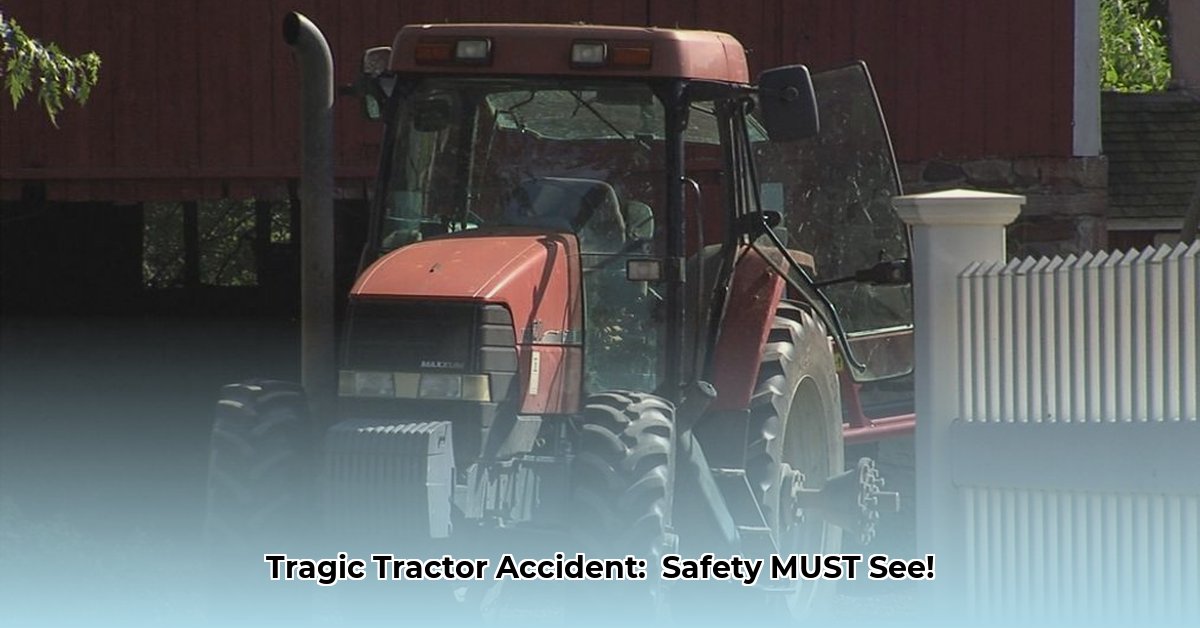
The recent death of 82-year-old Gerald Orville Fredricks in a tractor accident near Mankato, Minnesota, serves as a stark reminder of the inherent dangers in farming. Preliminary reports suggest the accident involved his tractor unexpectedly starting, highlighting the urgent need for improved safety practices. This tragedy underscores the vulnerabilities faced by many farmers, especially older individuals. This article details the accident and provides actionable steps to prevent similar occurrences. For more information on safe tractor operation, see this helpful guide: tractor safety.
Understanding the High-Risk Environment of Farming
Farming consistently ranks among the most hazardous professions. The work is physically demanding, often involving heavy machinery and unpredictable weather. While technology has advanced, substantial risks remain. Older farmers, like Mr. Fredricks, face amplified dangers due to age-related physical limitations. The combination of age and powerful farm equipment significantly increases accident risk. A momentary lapse in concentration or equipment malfunction can have devastating consequences.
Did you know that tractor rollovers account for a significant portion of farm fatalities? This underscores the critical need for robust safety measures.
Unraveling the Circumstances: What Possibly Happened?
The investigation into Mr. Fredricks' death is ongoing. Several factors could have contributed. A mechanical failure in the tractor's starting system remains a possibility. Were recent maintenance checks performed? Did Mr. Fredricks receive relevant safety training? While the specifics await investigation, one stark truth remains: a preventable death occurred. Analyzing this incident is crucial for preventing future tragedies.
Toward a Safer Future: Practical Steps for Change
This tragedy demands a multi-pronged approach involving farmers, agricultural organizations, government agencies, and tractor manufacturers.
For Farmers: Prioritizing Personal Safety
Schedule Regular Maintenance: Treat your tractor like a vital piece of equipment. Regular inspections and maintenance, focusing on the braking system and starting mechanism, are paramount. Preventative maintenance drastically reduces accidents. (Note: A well-maintained tractor is a safer tractor).
Embrace Modern Safety Features: Modern tractors offer critical safety features like Rollover Protection Structures (ROPS) and seatbelts, significantly reducing injury risk. Invest in these features; retrofitting older tractors is a worthwhile investment.
Continuous Improvement through Training: Invest in formal safety training programs. These courses refresh and improve safe operational practices. Staying updated is crucial for accident prevention. Knowledge is your best defense against injury. (Note: Many organizations offer subsidized safety training programs).
For Farming Organizations: Collective Responsibility
Launch Proactive Safety Campaigns: Widely disseminate farm safety information through workshops, pamphlets, and online resources. An informed community is a safer community.
Provide Financial Support: Offer financial aid or grants to support safety equipment purchases and training courses for farmers, especially smaller operations.
For Government Agencies: Strengthening Regulations and Support
Review and Update Regulations: Regularly review safety regulations to ensure they remain current, comprehensive, and effectively enforced. Update policies as needed to reflect modern technology and farming practices.
Data-Driven Initiatives: Collect accident data to identify recurring issues and high-risk areas. Use this data to inform and tailor safety campaigns.
For Tractor Manufacturers: Innovation for Safety
- Prioritize Safety in Design: Incorporate advanced safety features like improved automatic shutoff mechanisms and enhanced ergonomic designs during the design and manufacturing processes.
Analyzing the Risks: A Simplified Risk Assessment
| Factor | Likelihood of Accident | Severity of Consequences | Mitigation Strategies |
|---|---|---|---|
| Older, Poorly Maintained Tractors | High | High | Regular maintenance, upgrade or retrofit with safety features. |
| Inadequate or Outdated Safety Training | Medium | High | Comprehensive, regularly updated safety training programs. |
| Human Error (Distraction, Fatigue) | Medium | High | Rest breaks, awareness and educational campaigns. |
| Environmental Factors (Weather) | Low | Medium | Awareness of weather conditions, use of appropriate safety gear. |
A Collaborative Effort: Learning from Tragedy
Mr. Fredricks' death is a tragedy, but it's an opportunity for improvement. Implementing these steps contributes to a safer farming environment. Collaborative efforts will honor his memory and create a safer future.